
Table of contents
Overview
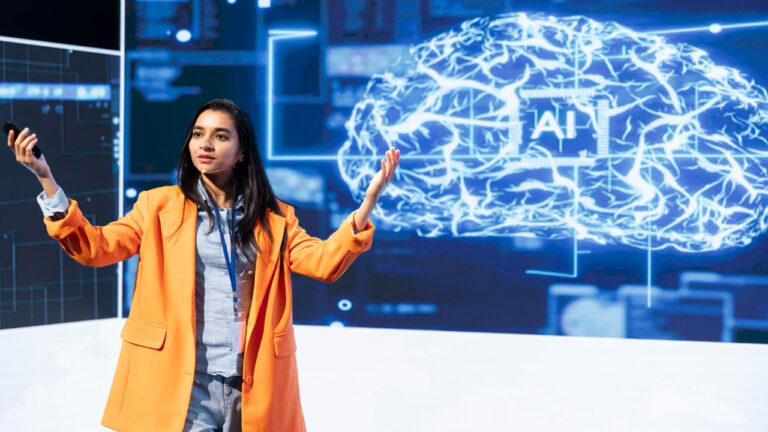
At the Dataquest Digital Leadership Conclave 2018 in Delhi, Prasoon Nigam discussed how Artificial Intelligence (AI) is fundamentally altering the business landscape. Beyond merely automating simple tasks to boost organizational performance, AI is enhancing the effectiveness of training management systems and reshaping conventional operational paradigms.
However, the rapid evolution of AI also sparks profound philosophical debates. When we contemplate creating systems capable of passing the Turing test and mimicking human responses, we must confront deep questions about consciousness, sympathy, and empathy. This article contextualizes these philosophical inquiries alongside the practical, disruptive power of AI and machine learning across modern industries.
1. The Philosophical Dimensions of AI
The Turing Test and Human Emulation
On the off chance that we produce something prepared to do breezing through the Turing test – something equipped for impersonating human reactions under specific conditions we do this to such an extent, that we can announce it genuine man-made brainpower. Though I’m not catching that’s meaning? What is consciousness? Is it sympathy? Is compassion made or natural? Similarly, in the event that we make a man-made brainpower equipped for showing sympathy, does that mean we have built compassion? Particularly, have we figured out how to make genuine insight in a PC mind?
The “Jurassic Park” Perception of AI
AI has changed the way ordinary people conceive about reality, which is actually pretty confusing for many people. The very notice of AI brings out these sorts of philosophical discussions. Individuals treat AI like they treat Jurassic Park. Therefore, they see the idea of man-made brainpower as one of mankind endeavoring to assume the job of God being bound to termination established in hubris once the creation outperforms the creator.
2. AI and Machine Learning in the Business Environment
Shifting Conventional Paradigms
AI in the business environment is changing the way businesses in conventional knowledge functioned. In addition to this, there is another area that the contemporary world should focus on: it’s machine learning.
From Basic Automation to Autonomous Decision-Making
Gone are the days of automation, when a particular repetitive task was possible for a nonhuman entity to execute without any supervision. The new buzz in the market is of machine learning. Here, complex networks of neural systems help the machines learn decision-making processes. The best part is when we train the machine sufficiently, it won’t even require human intervention, unlike automation.
3. Real-World Industry Transformation
Ubiquitous Integration
The truth, for instance, is that we are utilizing AI all the time now, at any rate in some structure or another. Man-made intelligence has upset pretty much every industry, and it will keep on doing as such.
Cross-Sector Impact
In this article, we will inspect how AI has improved. It has changed the application improvement, travel, obligation, retail, and IT enterprises so we may better see how AI associates with business.
For a deeper dive into these insights, you can watch the presentation here:
FAQ
Q:How does modern machine learning differ from traditional automation in a business context?
A:Traditional automation is limited to executing repetitive, specific tasks without supervision based on rigid, predetermined rules. Machine learning, however, utilizes complex neural networks to learn decision-making processes over time. Once sufficiently trained, these systems can adapt and make complex choices without requiring direct human intervention.
Q:What philosophical questions arise when an AI passes the Turing test?
A:When an AI successfully mimics human responses under specific conditions to pass the Turing test, it challenges our understanding of reality. It forces us to question the nature of consciousness itself asking whether traits like sympathy and empathy are purely natural biological phenomena or constructs that can be artificially engineered in a computer mind.
Q:Why do people often view AI through a lens of fear or hubris, like “Jurassic Park”?
A:The concept of creating genuine artificial intelligence alters ordinary perceptions of reality, which can be highly confusing. This confusion often leads people to view AI as humanity attempting to “play God,” sparking fears that human hubris will inevitably lead to a scenario where the creation outperforms and ultimately replaces its creator.
Final Thoughts
The dual nature of AI as a practical business driver and a philosophical enigma highlights the profound shift defining the modern era. As Prasoon Nigam emphasized, AI is no longer a futuristic concept; it is an active tool optimizing everything from corporate training management systems to retail and IT infrastructures.
The transition from rigid automation to autonomous machine learning marks a critical milestone where systems begin to simulate complex human capabilities. Navigating this transformation successfully requires businesses to balance the immense performance gains of neural networks with a grounded understanding of what it means to integrate intelligent machines into a human world.